Tea Glass, Fine Print: Reading Turkish Flavor on US Companion Listings in 2026
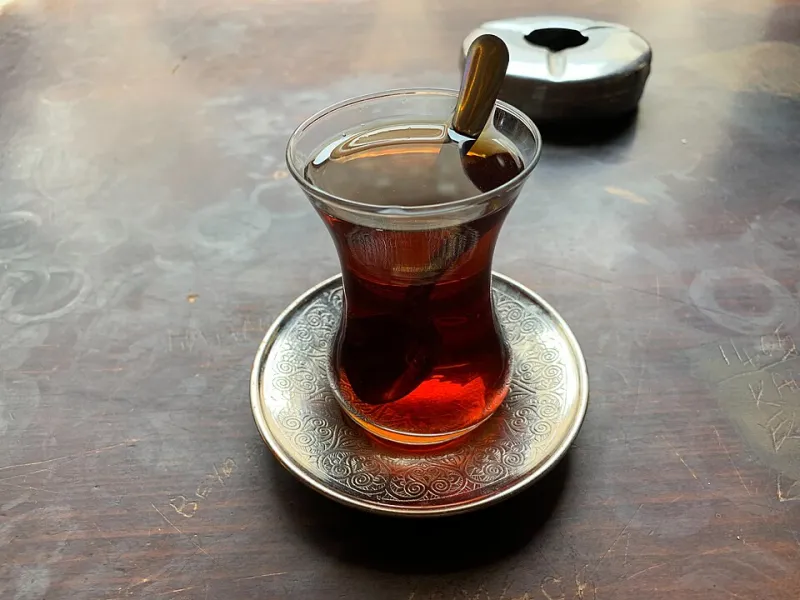
Photo: Robot8A, CC BY-SA 4.0, via Wikimedia Commons
A listing in Chicago opens with “Bayan arkadaş — discreet, friendly, central.” Another in Houston mentions “çay served on request” and a Turkish-speaking assistant. A third in Los Angeles scatters “hanım” and “arkadaş” through every paragraph like seasoning. All three are using borrowed language. Only some are using it to tell you something useful.
That is the puzzle with Turkish cues on US companion listings in 2026. They can be a small, honest signal of cultural context, language access, or neighborhood familiarity. They can also be wallpaper: attractive words pasted over a profile that would read the same in any city. The trick is not to become cynical about the words, and not to treat them as proof. Read them the way you would read any other listing detail — as a clue that needs support.
Flavor Is Not a Promise
Start with the vocabulary. “Bayan” means lady or woman. “Arkadaş” means friend or companion. Put together, “bayan arkadaş” is directory shorthand — a category label, not a guarantee of ethnicity, nationality, language ability, or service style. A listing that uses the phrase may be reaching Turkish-speaking clients, signaling a particular aesthetic, or simply using a keyword that performs well in search. None of those possibilities is automatically dishonest. They are just different reasons for the same words.
The mistake is to let atmosphere do the work of accuracy. A profile can feel warm, worldly, and specific because it mentions tea glasses and Istanbul evenings, while still leaving rates, availability, screening, and boundaries vague. In companion directories, the useful details are usually plainer: where the incall is, how deposits work, what languages are actually spoken during booking, and how cancellations are handled. Turkish phrasing should add texture to those facts, not replace them.
What a Grounded Cultural Cue Looks Like
A genuine cue tends to be operational. It shows up in the parts of a listing that affect your booking, not only in the headline. For example, a profile might say that Turkish is spoken during scheduling, or that a assistant handles messages in Turkish and English. It might name a neighborhood accurately, mention a local tea house as a nearby landmark, or explain a deposit policy in both languages. The Turkish is doing real work because it helps someone decide whether to send a message.
A grounded cue is also consistent. If the listing says “Türkçe konuşuyoruz” — we speak Turkish — but every scheduling instruction is English-only and the profile never says who speaks what, ask before assuming. If “hanım” is used as a respectful form of address, that is fine; it is not evidence of anything beyond tone. If “çay” appears once as a welcoming detail, treat it as hospitality language, not a promise that tea will be poured at the door.
Wallpaper Has a Certain Look
Decorative Turkish is usually loud in the headline and quiet in the fine print. You will see “bayan” stacked with “arkadaş” in every sentence, references to “Turkish nights” with no city detail, and tea-house imagery that could be copied onto any profile in any state. The words create a mood, but they do not answer basic questions. When you strip the borrowed language away, the listing has no more information than a generic template.
That does not make it a scam. Plenty of legitimate listings use mood language because mood sells. But wallpaper should never be mistaken for verification. A profile that leans heavily on cultural flavor while staying fuzzy about rates, screening, and boundaries is asking you to trust the wrapper instead of the contents.
A Three-Pass Read for Bilingual Listings
First, read for function. Scan the listing for rates, availability, contact method, screening steps, and cancellation terms. Does the Turkish text add any of that information, or does it only repeat the English in a more atmospheric way? If the Turkish disappears when the practical details begin, file it as decoration.
Second, read for specificity. Look for details that could only come from someone with real familiarity: a correct neighborhood name, a clear statement about which languages are spoken, a local landmark used sensibly, or a boundary explained without drama. Specificity is harder to fake than a mood.
Third, read for edges. Good listings are clear about limits. They say what is not available, how deposits are handled, and what happens if plans change. If the Turkish is doing real work, it will usually show up around those edges too — not just in the opening paragraph.
Questions That Keep You Grounded
You do not need to interrogate anyone about ethnicity or immigration status. That is not the point, and it is not good etiquette. Ask practical questions instead: Is Turkish spoken during booking? Are rates the same for all clients? Is “bayan arkadaş” being used as a category label or a description? Which neighborhood is the incall in? These questions respect the listing’s boundaries while testing whether the language is connected to anything real.
In the US, multilingual listings are ordinary. They appear in cities with Turkish communities, in tourist-heavy areas, and in directories trying to reach as many readers as possible. A Turkish phrase may be for diaspora clients, for travelers, for search visibility, or for style. The same standards still apply: clear rates, clear boundaries, clear screening, and reviews that sound like real experiences rather than copywriting.
The borrowed word is not a shortcut to trust. It is an invitation to look closer. If the tea glass comes with fine print, you are probably reading a listing that knows what it is doing. If it comes alone, enjoy the atmosphere — but keep your questions handy.